
That was the deceptively simple – but pertinent – question put to me at a panel recently. And one we need to ask ourselves regularly as PPWR, secondary legislation and targets meet real world application.
The discussion brought together perspectives from across the plastics and recycling value chain. For flexible packaging, regulation has clearly changed the direction of travel. But whether it delivers the intended results will depend on what happens in practice.
The Packaging and Packaging Waste Regulation (PPWR) has formalised important drivers of change. Design for Recycling, recycled content requirements, recyclability performance grades and, from 2035, Recycling at Scale create much clearer requirements for packaging and the systems that manage it.
We also fundamentally understand what needs to change technically. In the area of design, CEFLEX and its stakeholders have already tested more than 600 flexible packaging samples, generating evidence on sortability and recyclability and contributing to European standardisation. We continue to develop practical Design for Recycling guidance as the regulatory framework evolves.
More recently, we have mapped the qualities, quantities and secondary markets needed for post-consumer recyclates (PCR), alongside the corresponding transformation in sorting and recycling capacities and technologies needed to deliver them.
The bigger challenge now is making this economically viable and scaling it across an entire industry.
The scale of change is significant
CEFLEX modelling gives a sense of what lies ahead. Flexible polyolefin recycling input capacity needs to increase from around 2.4 million tonnes in 2024 to approximately 7.4 million tonnes in 2030 and 10 million tonnes by 2035.
And volume alone is not enough. It is about quality, too.
Different end markets need different qualities of PCR. To accelerate progress, our analysis already identifies 12 PCR quality grades and nine complementary recycling pathways needed to produce them: six mechanical, two physical/delamination and one chemical.
Simply producing more recycled plastic will not be enough if its quality does not match the applications that need to use it. Lower-quality outlets can become saturated while there is not enough suitable material for more demanding applications.
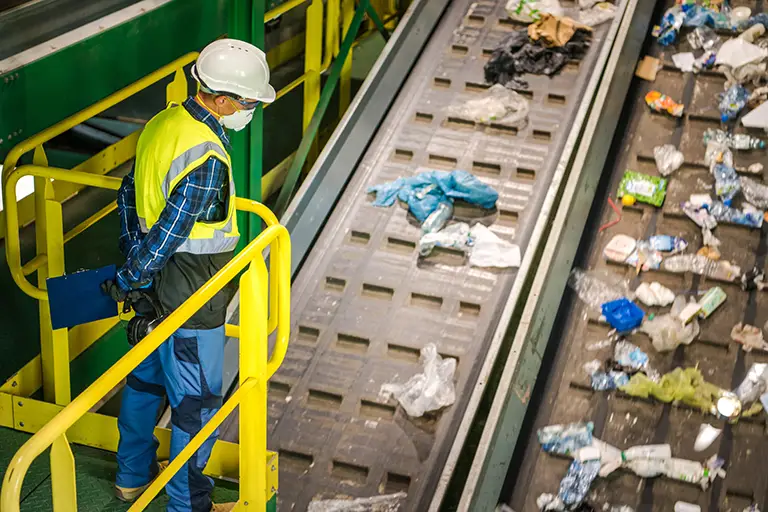
So, we need both capacity and capability: enough material collected, effective sorting and the right mix of recycling technologies to produce PCR at the quality different markets need.
Creating the enabling conditions has to come before the targets
The PPWR targets are extremely challenging. That makes agreeing and deploying the enabling conditions more important, not less.
Better collection and more automated sorting are needed to provide enough feedstock at the right quality – and at a sustainable cost. Recycling capacity needs investment. Markets need confidence that they can obtain consistent PCR. Recyclers need greater certainty about feedstock, demand and the regulatory framework before committing capital.
The timing on all of this also matters. Recycling plants can require one to two years for permitting and another one to two years for construction – and a further six months to become operational. Decisions being made now will therefore influence the capacity available when the 2030 requirements take effect.
Some of those decisions can look highly technical but have very practical consequences. The detailed PPWR rules now being developed will help determine what recycling output can count towards recycled content requirements, and which technologies can supply qualifying PCR. These choices will affect the economics of producing PCR and whether investment in new capacity makes sense.
Mandating demand does not automatically create supply
We cannot wait for the targets to bite before creating the conditions needed to deliver them.
This is also why national implementation is critical. European requirements start from very different collection, sorting and recycling systems. There will not be one identical route in every country. But those different national systems ultimately need to deliver the same European objectives.
EPR is crucial to help build the system we need and the business case for circularity
Extended Producer Responsibility (EPR) is central to this transition.
CEFLEX’s position is that EPR effectiveness is now a strategic industrial question, not only a waste-management issue. EPR can remain primarily a way of recovering the costs of managing packaging waste, or, well defined and supported, it can help build the business case for circular packaging markets.
EPR is a strategic coordinator to turn PPWR requirements into a clearer investment signal for better collection and sorting, the right mix of recycling technologies and capacity, and more stable feedstock supply.
One problem today is the gap between responsibility and control. Producers are legally and financially responsible for meeting recycling obligations, but in some national systems they have limited control over the strategy, material flows, infrastructure planning and spending decisions needed to deliver them. EPR fees can therefore rise without a clear link to better collection, sorting or recycling performance.
This does not mean Producer Responsibility Organisations (PROs) need to own or operate infrastructure. But they need enough organisational responsibility, contractual control and close collaboration with local authorities to help ensure materials receive the right treatment, improve the quality of recycling outputs and support the investment needed to meet future targets.
It also means planning beyond the next year. National strategies should identify gaps in collection, sorting and recycling infrastructure and set out how they will be addressed as PPWR requirements approach.
Put simply: EPR should not just pay for the system we have. It needs to help build the system we need.
Turning regulation into delivery
This is where CEFLEX and its stakeholders are concentrating their efforts.
We are testing packaging and bringing evidence into standards and regulation. Pilot projects and collaborations in Romania, Greece and Czechia are testing barriers and practical solutions on the ground. Alongside these, projects such as FlexCircular in the UK, collaboration with EPR schemes, and work with stakeholders across more than 16 European countries through workshops, site visits and assessments are helping us understand what works, where the gaps are and what needs to change.
Our work on recycling pathways and end markets is looking at what PCR qualities will be needed, where they can be used and what sorting and recycling infrastructure is required to produce them.
These pieces are connected. Design affects sorting and recycling. Collection determines how much feedstock is available. Sorting affects its quality. Recycling technologies determine which PCR qualities can be produced and which markets can use them. Those markets, in turn, affect whether there is a business case for investment.
This is also where the value chain can act collectively to make a useful contribution to regulation. Practical, rigorous evidence – just as we have done in the ‘Designing for a Circular Economy’ programme and our recyclability performance grade modelling: we tested this, this is what happened, and this is what the rules need to account for.
PPWR has set the destination. The period between now and 2030 is when much of the practical work needed to reach it has to happen.
CEFLEX already brings together a critical mass of frontrunners working on these challenges. But delivering circularity at the scale required will need a critical mass across the whole flexible packaging value chain: brands, retailers, converters, material suppliers, equipment and technology providers, EPR schemes, waste management companies and recyclers.
That is what #MissionCircular is about: bringing together the companies and organisations needed to make circular flexible packaging work at scale.

Arne Jost, External Affairs Director, CEFLEX